


How to Plan an International Trip from India: A Complete Step-by-Step Guide
Your first international trip should give you beautiful memories, incredible photographs and stories worth telling — not a headache from managing bookings, visas and unexpected expenses.
Because let's be honest: choosing a destination is the fun part. Figuring out how to get there, what documents you need, how much money to carry and whether your hotel is actually as beautiful as its photographs? That's where things get interesting.
The good news? You don't need to be an experienced traveller to plan an international holiday. You need to know what to do, when to do it and which mistakes to avoid. Whether you're dreaming of Thailand's beaches, Singapore's sparkling skyline, the mountains of Switzerland or the cultural charm of Central Asia, this guide will help you plan your first international trip from India without unnecessary stress.
Let's get your passport ready. Your next adventure starts here. 🌍✈️

🌍 1. Choose Your Destination Before You Start Booking
Every great trip begins with a little daydreaming.
Maybe you've been saving photos of European streets on Instagram, dreaming of relaxing on a Thai beach, or imagining exploring Kyrgyzstan's mountains. It's exciting to have options, but before you book anything, take a moment to decide what kind of experience you actually want. After all, a relaxing beach holiday and a packed European sightseeing trip require very different budgets, itineraries and energy levels.
Here are a few destinations to get your imagination going.
Thailand — For beaches, food and fun
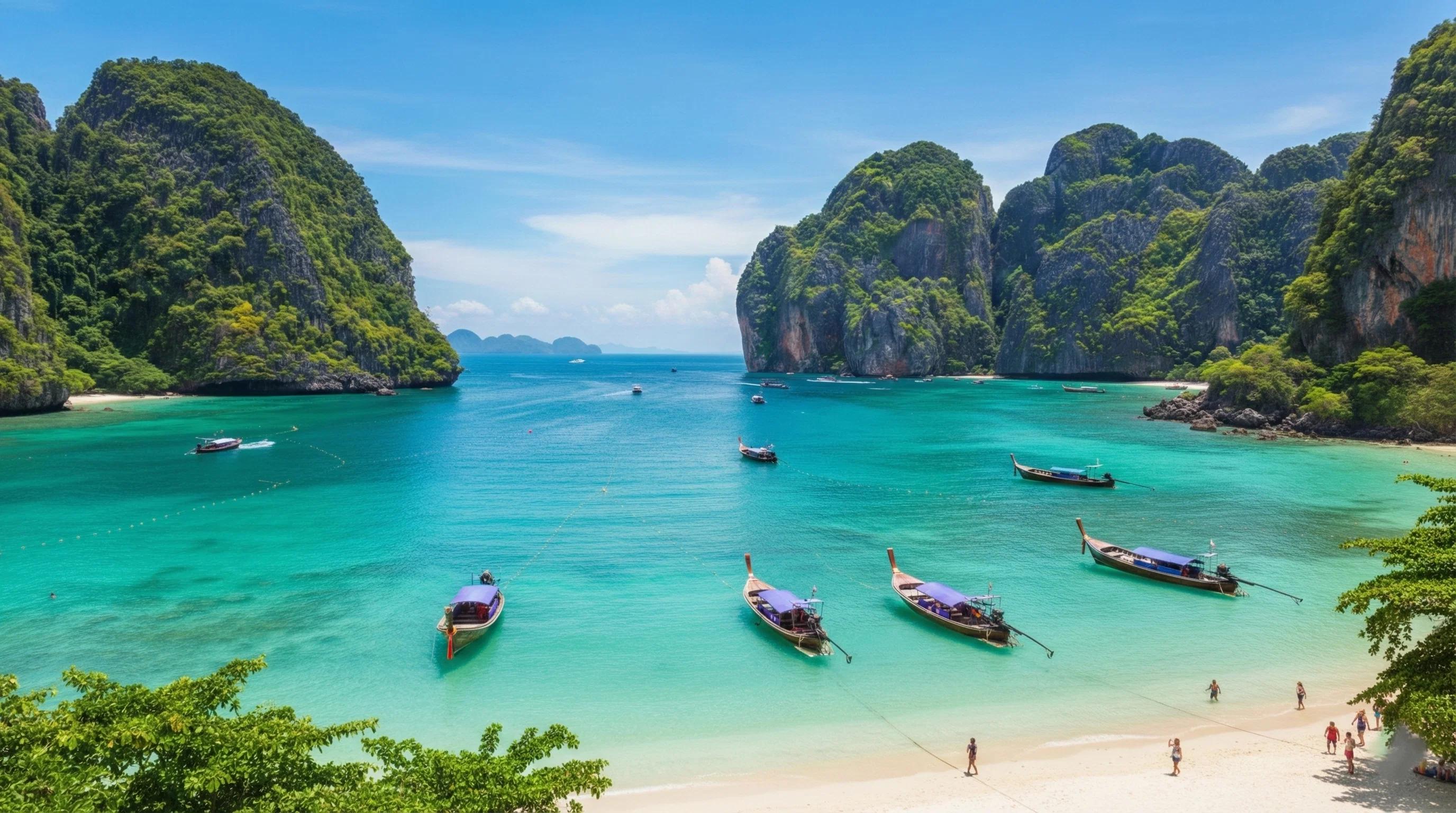 Thailand is a great option for travellers who want a mix of beautiful beaches, local markets, shopping, food and island experiences. Depending on your itinerary, you can combine lively city life with a few days of relaxation by the sea.
Singapore — For a smooth first international experience
 Singapore offers modern attractions, efficient public transport, diverse food and family-friendly experiences. It's particularly appealing if you prefer a well-connected destination with plenty to explore in a relatively compact area.
Switzerland — For mountains, lakes and unforgettable scenery

If your dream holiday involves mountain views, scenic train journeys and charming villages, Switzerland deserves a place on your list. Just remember that accommodation, transport, and sightseeing can be significantly more expensive than in many Asian destinations.
Before choosing, ask yourself these five questions
- What's my budget? Decide what you can comfortably spend without putting financial pressure on yourself after returning home.
- How many days do I have? A short holiday may suit one city or a compact destination, while a longer trip allows for multiple regions.
- What kind of experience do I want? Beaches, adventure, shopping, culture, nature or a little bit of everything?
- When do I want to travel? Check the weather, seasonal attractions, local holidays and expected crowds.
- What are the entry requirements? Research visa rules, passport validity and any additional documents required for Indian citizens.
Here's a simple rule: choose a destination that fits your life, not just your Instagram feed. A holiday should feel exciting before you leave and enjoyable while you're there.
💰 2. Decide Your Budget Before Your Budget Decides for You
Let's talk about the part nobody gets particularly excited about: MONEY💸.
You might find a tempting flight deal and think, "That's surprisingly affordable!" Then you add accommodation, sightseeing, meals, airport transfers, insurance and shopping. Suddenly, the trip costs considerably more than you imagined.
This is why your budget should come before your bookings.
What should your international travel budget include?
- Flights: Include return airfare, checked baggage, seat selection (if required), and any additional charges.
- Accommodation: Consider room rates, taxes, breakfast, deposits, and the hotel's location.
- Food and drinks: Estimate your daily meal expenses, including occasional cafés, restaurants, and snacks.
- Local transport: Account for airport transfers, taxis, trains, buses, and any intercity journeys.
- Sightseeing and activities: Include attraction tickets, guided tours, cruises, adventure activities, and other experiences you genuinely want.
- Travel essentials: Remember visa fees, insurance, forex charges, mobile data, and any necessary travel accessories.
- Emergency reserve: Keep an additional amount for unexpected expenses, delays, or changes to your plans.
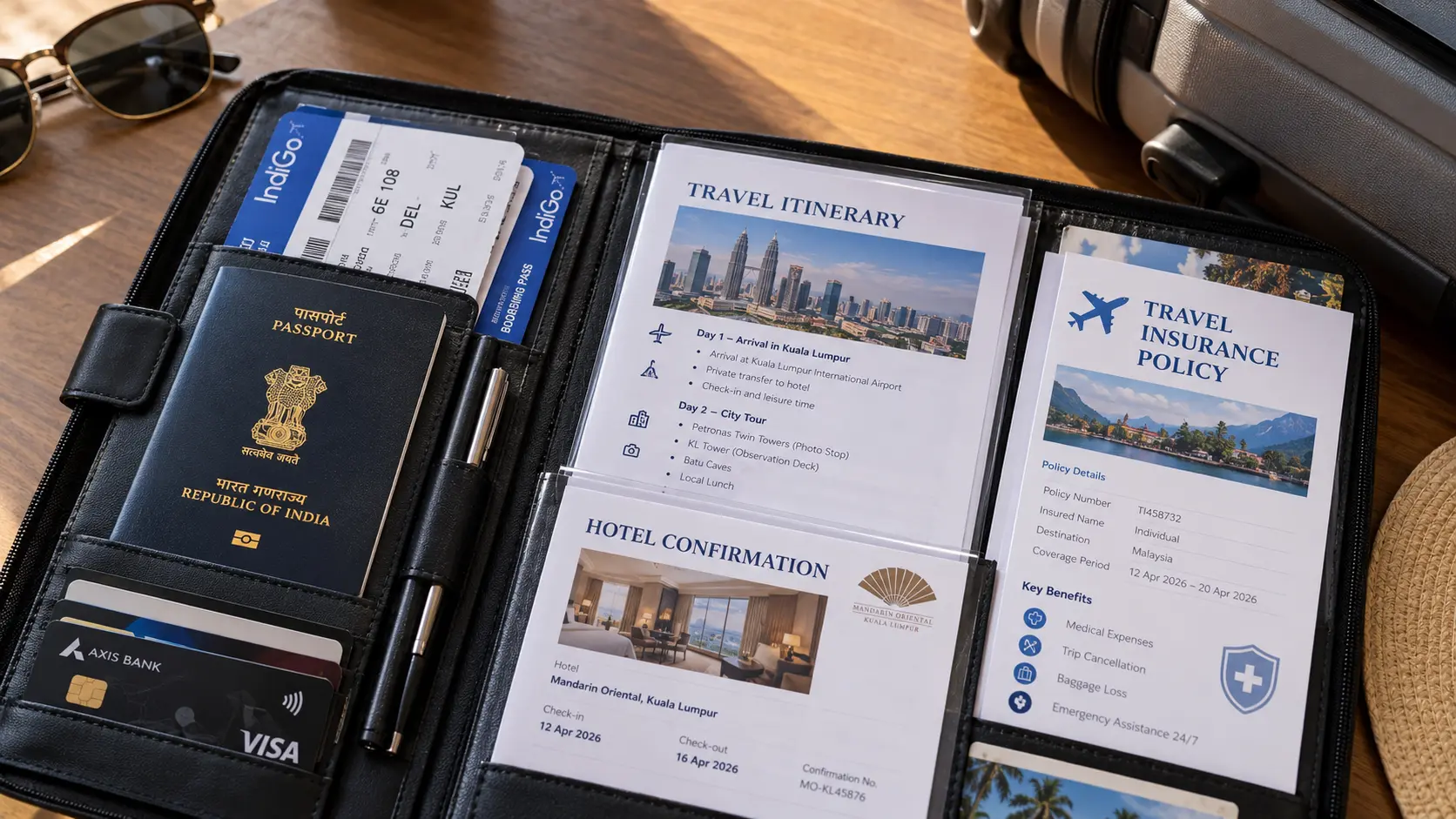
How much money do you actually need?
There is no single price for an international trip from India. A five-day holiday in Southeast Asia can have a very different cost from a five-day holiday in Switzerland. Your departure city, travel dates, hotel category, exchange rate and sightseeing choices all affect the final amount. Instead of relying on a package price you saw online, estimate the expenses for your own itinerary. Add up the major costs, calculate your daily spending and keep around 10–15% extra as a starting contingency reserve.
And please, don't spend your entire budget on flights and hotels. You should still have enough left to enjoy the destination.
Bhrraman tip: Decide what matters most to you. If you love experiences, spend more on activities and choose simpler accommodation. If comfort is your priority, invest in a conveniently located hotel and keep your sightseeing plans selective. The aim isn't to spend the least amount possible. It's to spend wisely on the things that make your trip worthwhile.
✈️ 3. Book Your Flights Without Falling for Every Cheap Deal
Finding a good flight feels like winning a small lottery. Finding out that your supposedly cheap ticket doesn't include the baggage you need? Not quite the same feeling.
The trick is to compare the complete journey, not just the price displayed in the search results. Start by checking different departure dates. If your schedule is flexible, travelling a day or two earlier or later may reveal better options. Compare direct flights with connecting flights, and pay attention to arrival times. A flight that lands in the middle of the night may mean extra transport costs or difficulty checking into your hotel. A long layover might save money but leave you exhausted before your holiday even begins.
Before booking your flight, check:
- Whether the fare includes the baggage allowance you need.
- The total journey time and any connecting flights.
- Transit visa requirements for your route and nationality.
- The airport you'll arrive at, especially if the destination has multiple airports.
- Cancellation, refund and rescheduling conditions.
- The time between arrival and hotel check-in.
- Whether the booking confirmation and passenger details are correct.

One more thing: don't rush into non-refundable hotel reservations simply because you've found a flight deal. Check your visa requirements, cancellation exposure and overall itinerary first. A little patience during booking can save you a lot of money later.
🛂 4. Understand Your Visa Requirements Early
For many first-time international travellers, the word visa is enough to create a dozen new questions. Do I need one? How long does it take? What documents are required? What if my application is delayed?
The easiest way to manage the process is to research your destination's entry requirements before making expensive, non-refundable commitments. Depending on your destination and eligibility, you may need a visa in advance, an electronic visa, a visa on arrival or no visa for a permitted short stay. These arrangements are not interchangeable, and the rules can change.
Start with the destination's official immigration website or embassy. You can also consult the Indian Ministry of External Affairs and the IATA Travel Centre for relevant travel-document guidance.
What documents might you need?
Although requirements vary by country and visa category, common requests include:
- A valid passport and the required passport photographs.
- A completed visa application.
- Flight itinerary and accommodation details.
- Proof of sufficient funds.
- Employment, business or student documents, where applicable.
- Travel insurance, if required.
- Supporting documents explaining the purpose of your visit.
Some applications may also require biometrics, an interview or additional supporting evidence.
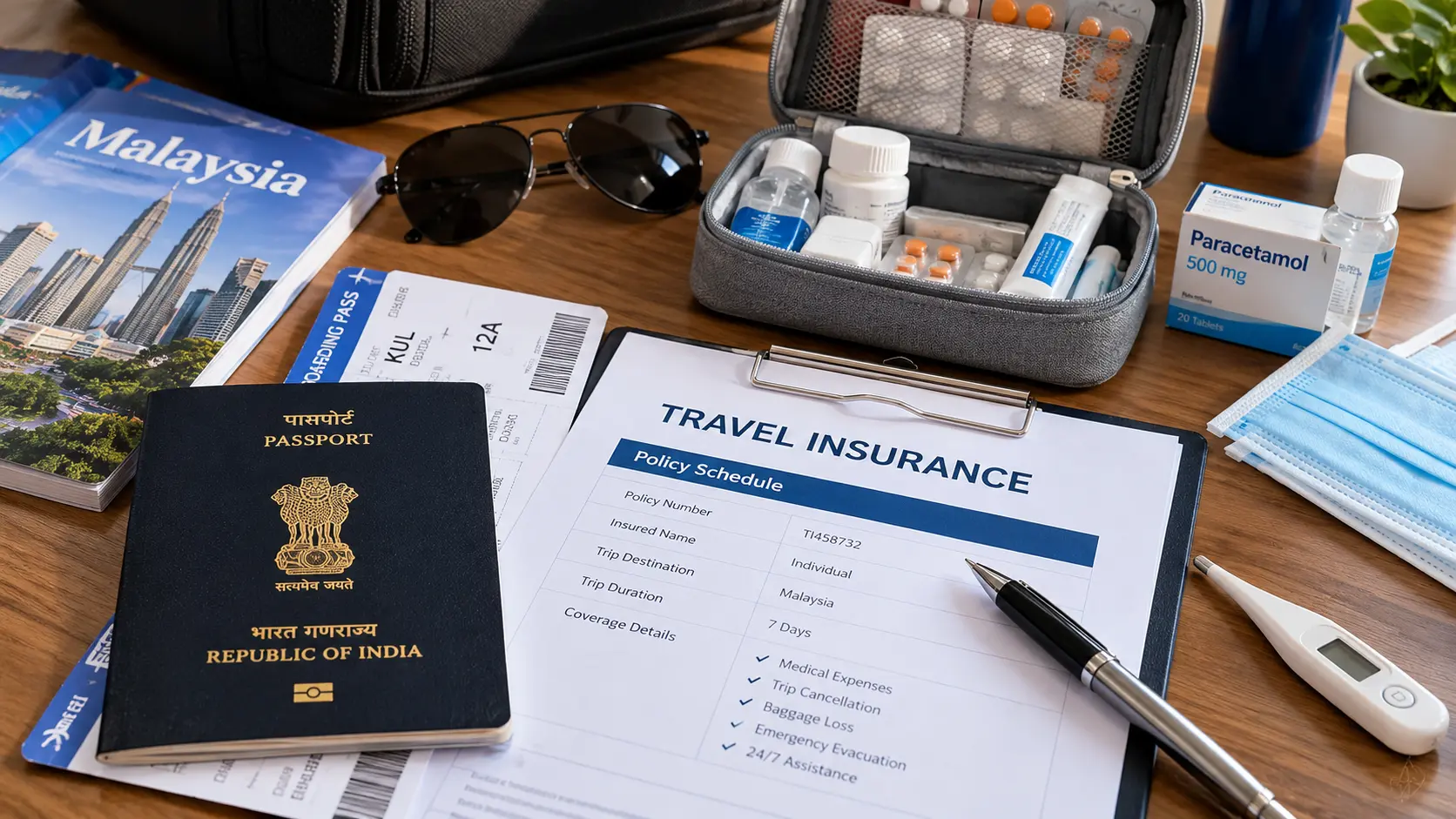
When should you apply?
Don't leave the process until the last minute. Check the official processing times, application windows and document requirements for your destination, then build those timelines into your travel plan.
Also, remember that having a visa does not automatically guarantee entry. Immigration officers may ask about your accommodation, finances, return journey and reason for visiting. The simplest approach is to keep your documents organised and make sure your plans match the information you provide. If the process feels complicated, professional visa assistance can help you understand the requirements and organise your application. However, the final decision rests with the relevant immigration authority.
🏨 5. Choose a Hotel That Makes Your Trip Easier
A hotel can look absolutely perfect online. Beautiful room, elegant interiors, impressive views. Then you discover that it's nowhere near the attractions you planned to visit. Congratulations: you've booked yourself a daily commute instead of a convenient holiday stay.
When choosing accommodation, look beyond photographs and star ratings. The location, transport links, recent reviews and total cost can make a much bigger difference to your experience than you might expect.
What should you look for?
- Location: Check how far the hotel is from the places you want to visit, public transport and the airport.
- Recent reviews: Look for repeated comments about cleanliness, noise, staff behaviour and the accuracy of the listing.
- Room details: Confirm the bed configuration, occupancy limits, facilities and whether the room has a private bathroom.
- Total price: Check taxes, deposits, service charges and any additional fees.
- Meal arrangements: Find out whether breakfast is included and whether suitable food is available nearby.
- Cancellation policy: Understand the refund conditions and the deadline for cancelling without a penalty.
- Check-in arrangements: Confirm how late you can arrive, particularly if your flight lands at night.

Here's a useful way to think about it: a slightly more expensive hotel in the right location might save you money on daily transport and give you more time to explore. Your accommodation doesn't need to be the most luxurious property in town. It needs to work for the trip you're planning.
🩺 6. Don't Treat Travel Insurance as an Unnecessary Expense
Nobody plans a holiday expecting to need medical assistance, experience a flight disruption or deal with missing baggage.
Unfortunately, unexpected events don't check your itinerary before arriving.
Travel insurance can help protect you against certain covered expenses, including emergency medical treatment, trip interruptions and baggage-related problems. Overseas medical treatment, in particular, can be expensive. Before choosing a policy, check the coverage limits, exclusions, deductibles and claims process.
Depending on the policy, you may want to look for:
- Emergency medical expenses and hospitalisation.
- Medical evacuation and repatriation.
- Covered trip cancellation or interruption.
- Lost, delayed or damaged baggage.
- Flight delays or missed connections, where covered.
- Emergency assistance services.
Planning an adventure holiday? Check whether activities such as skiing, trekking at altitude or scuba diving are covered. Some require specialised cover. Keep your insurance certificate, policy number and emergency assistance contact details accessible offline. Buying insurance is only half the job; knowing how to use it matters too.
💱 7. Sort Out Your Forex Before You Leave India
You've arrived at your destination, you're hungry, and the taxi driver is waiting. You reach for your wallet and realise you haven't arranged a way to pay.
Not the ideal start to an international holiday.
Forex planning is simply about making sure you can access and spend money conveniently abroad. You may choose to carry some foreign currency in cash, use a prepaid travel card or rely partly on an eligible international debit or credit card. The right combination depends on the destination and your spending habits.
Your main payment options
- Foreign currency cash: Useful for small purchases, tips and places that don't accept cards.
- Forex card: A prepaid card that may offer convenient spending in supported currencies. Compare exchange rates, issuance fees, ATM charges, and reload conditions.
- International debit or credit card: Convenient for many hotel bookings, restaurants and purchases, provided overseas transactions are enabled and the fees are acceptable.
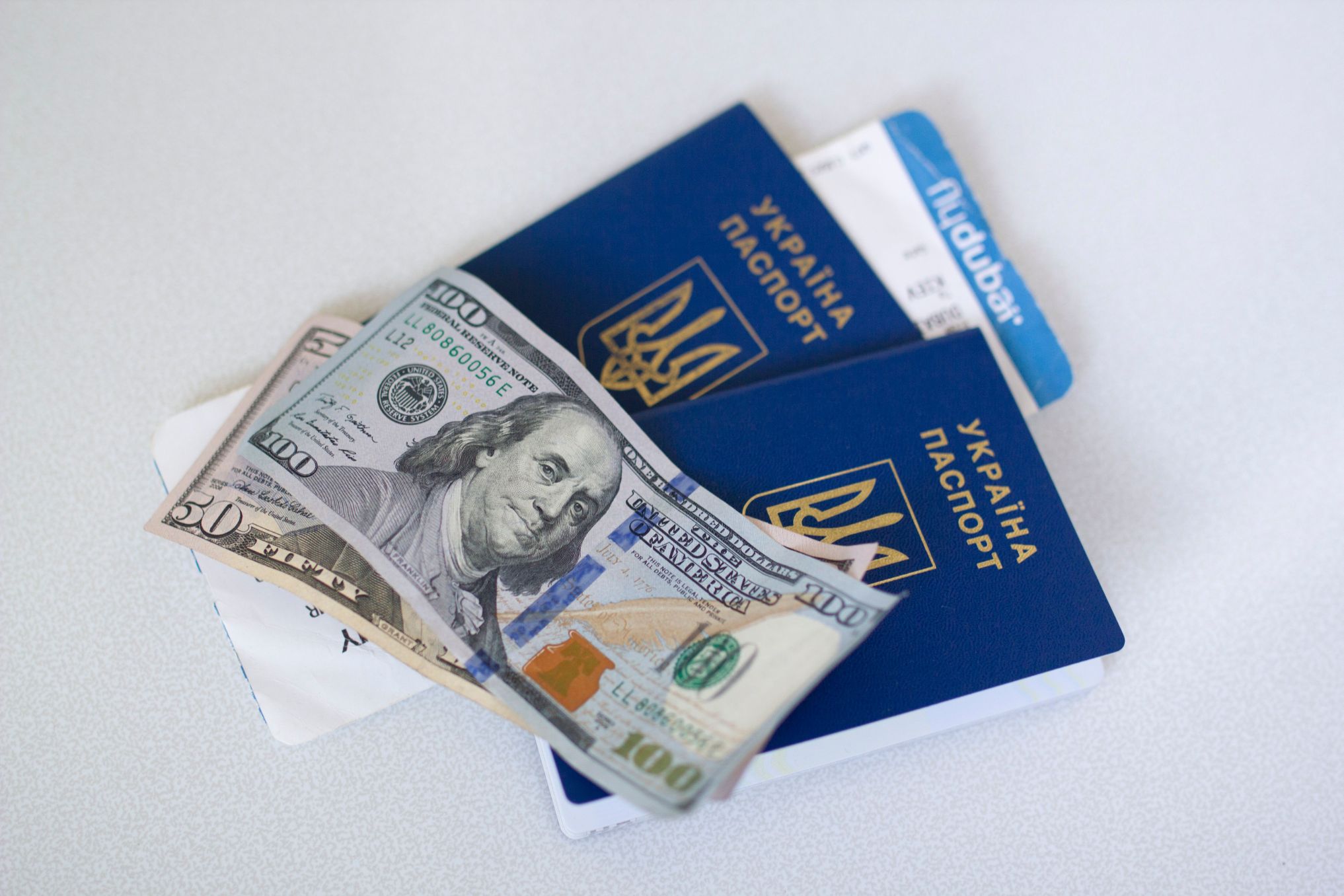
Forex mistakes worth avoiding
- Compare the actual exchange rate and fees rather than the advertised rate alone.
- Use authorised forex providers and follow applicable Indian foreign-exchange rules.
- Avoid carrying all your money in cash.
- Keep a backup card in a separate place.
- Check international transaction and ATM withdrawal charges.
- When a payment terminal offers currency conversion, compare the costs carefully; paying in the local currency often avoids the merchant's additional conversion markup.
Carry enough local currency for immediate expenses after arrival, particularly if you expect to use taxis or public transport before arranging other payment options. And no, you don't need to convert your entire holiday budget into cash before departure.
📱 8. Arrange Your SIM, eSIM or International Roaming
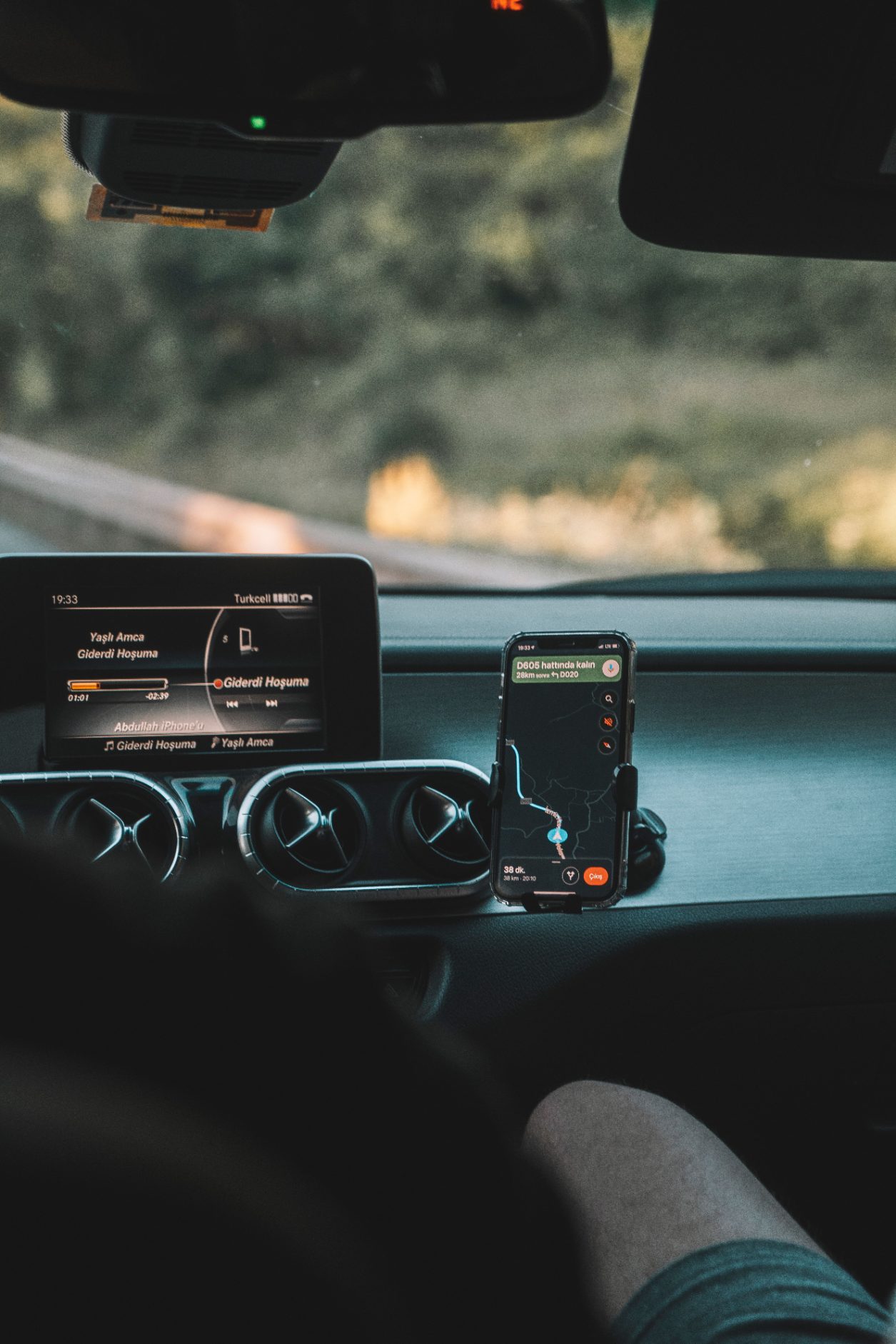
Maps, hotel confirmations, transport apps, translation tools and messages to your family all depend on something you might forget to plan: mobile connectivity. Your phone may work perfectly in India and still leave you without affordable data abroad. Before travelling, compare three common options.
- Travel eSIM: Convenient if your phone supports eSIM and is network-unlocked. You can often buy a plan online before departure. Check whether it includes calls, texts or data only, and when the plan activates.
- Local SIM card: A useful option if you prefer a local number or your phone doesn't support eSIM. Check the registration requirements, data allowance and validity period.
- International roaming: Allows you to continue using your existing number, depending on your mobile operator and selected plan. Check charges and coverage before enabling it.
Before you activate your plan
- Check that your device is compatible.
- Compare data allowances and validity periods.
- Confirm coverage for every destination on your itinerary.
- Check whether calls and hotspot use are included.
- Download offline maps and essential travel information.
- Save your hotel's address and driver details somewhere accessible without mobile data.
A reliable connection makes navigating a new country considerably easier. It also means you can spend less time searching for directions and more time enjoying the place you travelled to see.
🚘 9. Plan Your Airport Transfers and Local Transport
Getting from the airport to your hotel might sound like a small detail. Until you land in an unfamiliar city, with luggage, limited connectivity and absolutely no desire to negotiate your way through an unknown transport system. This is why transportation deserves attention before departure.
What should you arrange?
- Airport pickup: Confirm the pickup point, driver's contact details, vehicle type and waiting policy.
- Public transport: Research airport trains, buses, metro connections and travel passes.
- Private transfers: Consider these for families, groups, late-night arrivals or destinations with limited public transport.
- Intercity journeys: Check whether trains, domestic flights or long-distance buses need reservations.
- Return airport transport: Estimate the journey time and allow a reasonable buffer for traffic and airport procedures.

Before confirming a transfer, check whether the price includes tolls, waiting time, luggage and any additional charges. For a late arrival, make sure the driver knows your flight details and the procedure for delays. If you're travelling with elderly family members or young children, convenient transportation can make a particularly noticeable difference. The same principle applies to sightseeing: plan how you'll move between attractions instead of assuming every location will be a short walk away.
🎟️ 10. Plan Your Sightseeing Without Turning the Holiday Into a Race
There's a certain temptation when visiting a new country to see absolutely everything. One famous landmark in the morning, three museums before lunch, a distant viewpoint in the afternoon and a night market after dinner.
By day three, you're exhausted, your feet are protesting, and the holiday feels suspiciously like a work assignment. You don't have to see everything to experience a destination properly.
Build a more enjoyable itinerary
- Group nearby attractions. Explore places in the same neighbourhood on the same day to reduce unnecessary travel.
- Prioritise your favourites. Book popular attractions, guided tours and experiences with limited availability in advance.
- Leave room for spontaneous moments. A local café, an unexpected street performance or a quiet walk can become a favourite memory.
- Check opening hours. Museums, markets and attractions may close on particular days or operate seasonally.
- Consider the weather. Keep an alternative plan for outdoor activities that may be affected by rain, heat or snow.
- Check cancellation conditions. Understand the terms before booking tours or tickets.

Example: How to organise a five-day international trip
Day 1: Arrival and settling in
Arrive at your destination, transfer to the hotel, check in and enjoy a relaxed meal. If you have the time and energy, explore the nearby neighbourhood.
Day 2: Discover the main attractions
Visit the destination's best-known landmarks, historic areas or famous viewpoints. Keep the route practical rather than travelling across the city repeatedly.
Day 3: Experience the local culture
Explore museums, local markets, cultural sites or neighbourhoods. Try local food and leave time to discover places that weren't on your original list.
Day 4: Enjoy a special experience
Choose a day trip, nature excursion, scenic railway, cruise or another activity that suits your destination and interests.
Day 5: A relaxed morning and departure
Enjoy breakfast, finish any last-minute shopping and head to the airport with enough time for your international flight. This is a flexible framework, not a fixed itinerary. Your actual plans should account for flight timings, travel distances, opening hours and the number of nights you have available. The goal is to return home with memories of the destination—not just photographs taken while rushing towards the next attraction.
📂 11. Keep All Your Travel Documents Organised
Your passport may be the most important document you carry, but it isn't the only one you'll need.
Imagine being asked for your hotel confirmation at immigration while it's buried somewhere in your email inbox. Now imagine trying to find it without an internet connection. A little organisation can save you a surprising amount of stress.
Your essential document checklist
- Valid passport meeting your destination's validity and blank-page requirements, where applicable.
- Required visa or entry authorisation.
- Flight tickets and return or onward journey details, if required.
- Hotel reservations and accommodation addresses.
- Travel insurance certificate and emergency contact details.
- Proof of funds and supporting documents, where required.
- Airport transfer confirmations and your itinerary.
- Driving licence and international driving permit, if applicable.
- Prescriptions and relevant documentation for medicines, where necessary.
Save digital copies securely and keep a separate backup. You can also retain printed copies of particularly important documents. Before departure, check the destination's rules on medicines, restricted items, food products and customs declarations. Items that are permitted in India may be restricted elsewhere.
For additional guidance, consult the Ministry of External Affairs and the relevant destination authorities.
🧳12. Ready for Take-Off? Your Final Travel Check
Here are some alternatives:
- Before You Fly: Your Final Travel Checklist
- The Last-Minute Things You Shouldn't Forget
- Ready for Take-Off? Check These First!
- One Last Check Before You Leave India
- Your International Trip: Final Preparations
- Don't Pack Yet! Have You Checked These?
- The Final Countdown: Things to Do Before Departure
- Before Boarding: Make Sure You're Travel-Ready
- Everything in Place? Your Pre-Flight Checklist
- From Documents to Packing: Your Final Travel Check
A final tip: check your airline's guidance on airport arrival times, baggage restrictions, liquids and batteries. Keep your important documents and valuables accessible in your cabin bag, subject to applicable rules. Then take a breath. You've done the planning. It's time to enjoy the anticipation.
⚠️ Common International Travel Mistakes to Avoid
Even experienced travellers occasionally overlook something. For first-time travellers, a few small mistakes can make an otherwise wonderful trip unnecessarily expensive or stressful. Booking flights without checking visa requirements: Research entry conditions and processing timelines before committing to non-refundable bookings.
- Choosing a hotel only because it's cheap: Consider its location, transport connections and additional travel costs.
- Ignoring baggage charges: A low airfare may not include the luggage allowance you need.
- Carrying only cash or one payment card: Keep a backup payment method and store it separately.
- Forgetting about mobile data: Check roaming charges and arrange suitable connectivity before departure.
- Overloading the itinerary: Allow time for meals, transport, queues, rest and unexpected discoveries.
- Skipping insurance without considering the risks: Understand the potential costs of overseas medical treatment and travel disruptions.
- Leaving document checks until the last minute: Verify your passport, visa, booking confirmations and entry requirements in advance.
The secret to a smoother international holiday isn't having every minute planned. It's preparing for the important things so you can be flexible about the enjoyable ones.
✨ Make Your First International Trip Easier with Bhrraman
Planning an international holiday involves more than booking a flight and choosing a hotel. Flights, visa requirements, accommodation, insurance, forex, transfers and sightseeing all need to work together.
You can organise everything independently, but coordinating multiple bookings can take considerable time, particularly when you're travelling abroad for the first time. Bhrraman helps travellers organise key parts of their journey, with services that may include flights, visa and passport assistance, hotels, transfers, sightseeing, travel insurance and forex assistance, depending on the destination and service requirements. Whether you're planning a family holiday, a trip with friends or your first international adventure, the idea is simple: make informed decisions, plan thoughtfully and spend more of your time looking forward to the journey.
Or you could just let Bhrraman handle it for you.
Explore destinations at bhrraman.com/destinations and start planning your next international holiday around your interests, dates and budget.
Services, package inclusions and availability vary by destination. Confirm current prices, entry requirements and booking conditions before making arrangements.
Frequently Asked Questions
1. How do I plan my first international trip from India?
Start by choosing a destination that suits your budget, interests and available time. Check passport and visa requirements, estimate your total expenses, then arrange flights, accommodation, insurance, forex, connectivity, transfers and sightseeing.
2. How much does an international trip from India cost?
The cost depends on the destination, travel dates, trip duration, accommodation and activities. Include flights, meals, local transport, insurance, visa-related expenses and sightseeing when calculating your budget.
3. Which documents are required for international travel from India?
Common requirements include a valid passport, the required visa or entry authorisation, flight and accommodation details, and any supporting documents requested by your destination. Requirements differ by country.
4. Should I buy travel insurance for an international holiday?
Travel insurance is worth considering because overseas medical treatment and unexpected travel disruptions can be expensive. Check whether insurance is mandatory for your destination or visa, and review the policy's exclusions.
5. Should I exchange currency before leaving India?
Compare exchange rates, fees and convenience before deciding. Carry a reasonable amount of local currency, use authorised providers and keep a backup payment method.
6. Is it better to plan an international trip independently or through a travel company?
Independent planning gives you flexibility, while a travel company can help coordinate multiple services and simplify logistics. Compare total costs, inclusions, cancellation terms and support before deciding.
Plan Smart. Travel Better. Explore More. Let Bhrraman take care of the details while you enjoy the journey! ✈️